

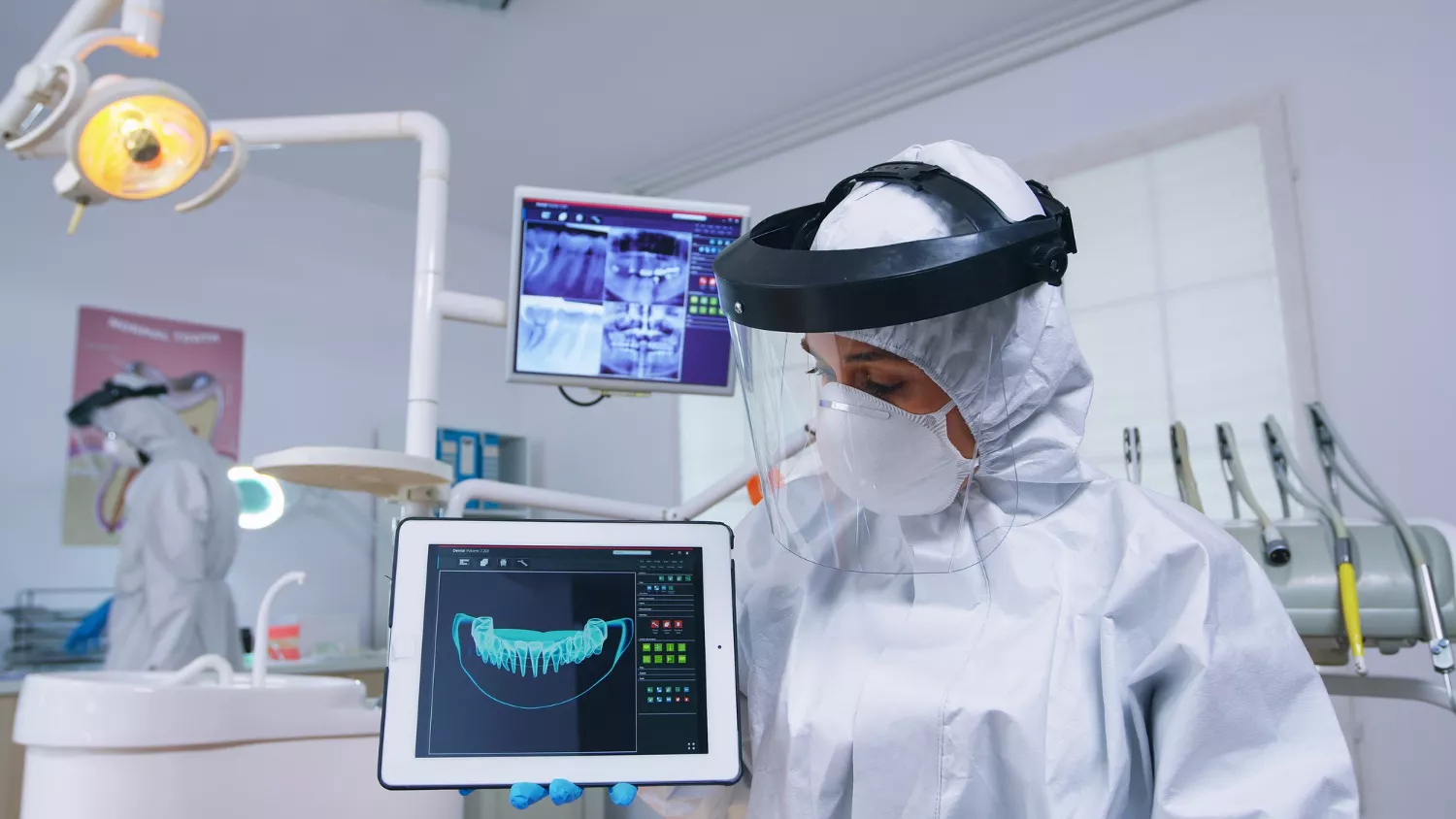
Dental technology trends describe the set of advanced dental technology, digital tools, and clinical workflows that change how dentists diagnose, plan, and deliver care. In the United States (U.S.) in 2025-26, the biggest shifts center on AI-assisted X-rays, 3D imaging, intraoral scanners, digital impressions, CAD/CAM Dentistry, 3D printing technology, laser dentistry, and teledentistry, all designed to improve clinical accuracy, patient comfort, and long-term oral health.
These trends show up during a routine dental visit as faster imaging, earlier detection of dental problems, fewer appointments for common restorations, and more personalized care experiences through oral health plans that match risk level and medical history.
What are the dental technology trends in 2026?
Dental technology trends in 2025-26 include AI-assisted X-rays, AI-assisted radiographic analysis, CBCT scans for 3D imaging, intraoral scanners for digital impressions, CAD/CAM dentistry for same-day crowns, 3D printing in dentistry, laser dentistry for minimally invasive treatments, teledentistry solutions for remote triage and follow-ups, and emerging AR/VR and robotics tools for education, anxiety reduction, and surgical support.
Below are the trends that matter most in the USA, with the “why it matters” tied to outcomes patients notice.
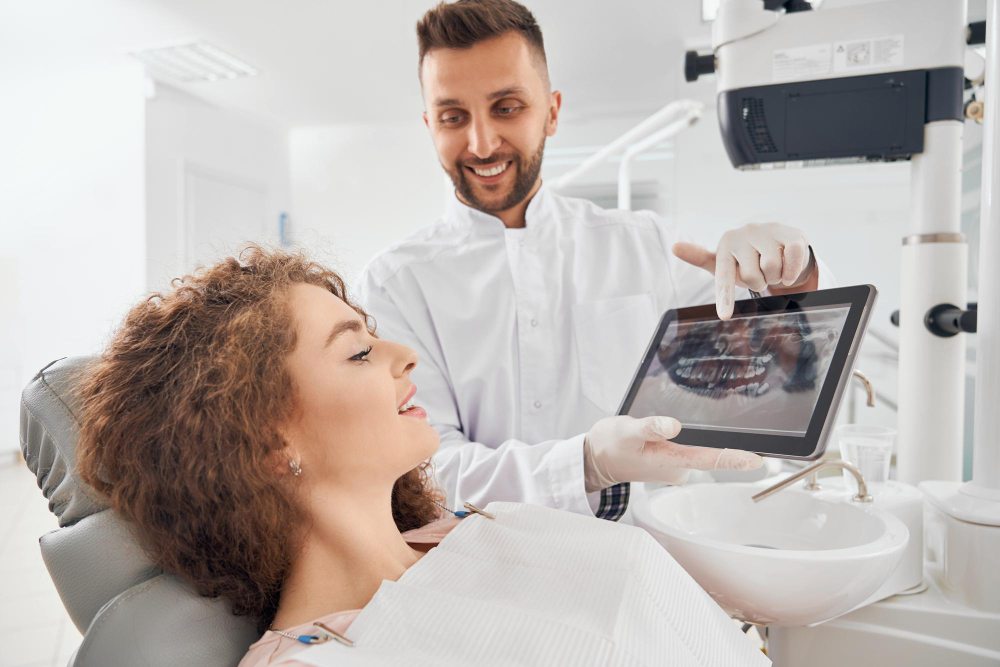
Why dentistry in the USA is changing?
U.S. dentistry is shifting toward prevention, speed, and consistency. Clinics invest in digital dentistry advancements to reduce missed findings, standardize diagnosis, and compress treatment timelines.
Policy and payer context matters too. Medicare coverage remains limited for routine dental care, yet guidance and rule changes have expanded coverage in certain medically necessary situations tied to medical care rather than routine dentistry. That reality shapes demand for clear treatment justification, better documentation, and cost transparency across dental insurance options.
Artificial Intelligence (AI) in dentistry
Artificial Intelligence (AI) is now embedded in imaging, treatment planning, and patient communication. The practical impact is AI-powered diagnostics accuracy, faster interpretation, and fewer missed issues on common images.
AI-assisted X-rays and early cavity and gum disease detection
AI-assisted X-rays use AI software to review dental X-rays at pixel level, flagging patterns associated with decay and periodontal concerns. The goal is early cavity and gum disease detection before pain or visible breakdown.
Peer-reviewed discussions keep emphasizing that AI systems can improve consistency and highlight “second looks,” while clinical judgment stays with the dentist. (Cureus)
AI-assisted radiographic analysis and reduced human error
AI-assisted radiographic analysis typically runs on digital X-rays and may extend to CBCT scans. It aims to reduce human error by standardizing what gets flagged for review, which can support clinical accuracy when a dentist validates the findings.
FDA-cleared dental AI products for radiographic review have expanded over time, reflecting real-world adoption beyond pilots. (SAGE Journals)
Predictive outcomes and cost-effective long-term care
Predictive outcomes refer to using imaging plus history to estimate future risk: recurrent decay, periodontal progression, implant complications, or endodontic failure risk. Better prediction supports cost-effective long-term care because a clinic can focus on prevention, sealants, periodontal therapy timing, occlusal guard decisions, and recall intervals based on risk instead of habit.
For patients, the visible change is shorter time to a plan and fewer surprises.
3D imaging and improved dental imaging
3D imaging is a core dental technology trend because it changes diagnosis quality for implants, impacted teeth, endodontics, pathology suspicion, and airway and sinus-adjacent planning.
Cone Beam Computed Tomography (CBCT) scans
Cone Beam Computed Tomography (CBCT) is a 3D x-ray imaging technique widely used in dental radiology, especially for anatomical assessment and treatment planning where 2D limitations matter.
CBCT scans help clinicians evaluate bone volume, root morphology, impacted teeth positioning, and proximity to nerves and sinuses. That reduces guesswork and can improve surgical predictability.
Where 3D imaging changes a routine dental visit
3D imaging changes a routine dental visit when a clinic can move from “suspected” to “confirmed” for structural issues. Common examples include:
- Implant planning and restorative-driven placement decisions
- Root fracture suspicion and complex endodontic evaluation
- Impacted third molars near the inferior alveolar nerve
- Unexplained pain with normal 2D findings
Intraoral scanners and digital impressions
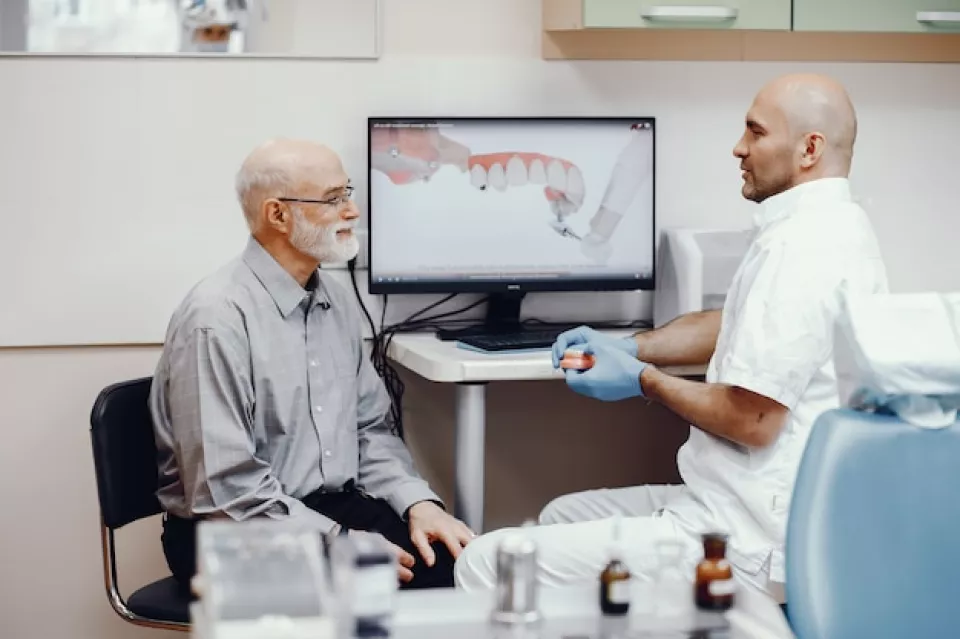
Intraoral scanners replace many traditional impression materials with digital impressions. This is one of the highest-impact digital tools for patient comfort and workflow speed.
Why intraoral scanners are replacing physical impressions
Digital impressions reduce gagging, reduce remakes, and improve communication between clinic and lab. The scan becomes a reusable 3D file for restorations, aligners, retainers, occlusal guards, and digital smile design workflows.
iTero (Align Technology) positions its scanner workflow around digital impressions for restorative and orthodontic use cases. (carestreamdental.com)
Practice efficiency from a digital workflow
Digital workflow practice efficiency comes from fewer failed impressions, fewer shipping delays, faster lab turnaround, and easier chairside design collaboration. This shift is tightly linked with CAD/CAM Dentistry and 3D Printing in Dentistry.
CAD/CAM dentistry and on-site fabrication
Computer-Aided Design and Computer-Aided Manufacturing (CAD/CAM) dentistry is now a mainstream driver of same-day crowns and shorter treatment timelines.
Same-day crowns, fewer appointments, and no temporary restorations
Same-day crowns matter because they reduce time off work and reduce failure points from temporaries. Patients often need fewer appointments, with no need for temporary restorations that can loosen, fracture, or cause sensitivity.
CEREC (Dentsply Sirona) is a prominent chairside CAD/CAM system used for same-day restorations, reflecting the “digital impressions to in-house fabrication” workflow. (Dentsply Sirona)
Exceptional precision and personalization, perfect fit, natural aesthetics
Precision improves when the restoration is designed from a high-resolution scan and milled or fabricated with predictable tolerances. The intended result is a perfect fit, less occlusal adjustment, and natural aesthetics through modern ceramics and finishing protocols.
3D printing technology and 3D printing in dentistry
3D printing technology is expanding beyond models into functional appliances and restorative components. In 2025-26, the main shift is scale: more clinics run in-house printers, more labs rely on printed workflows, and more specialty applications become routine.
3D printing in dentistry use cases that are already common
3D Printing in Dentistry is commonly used for:
- Surgical guides for implants and extractions
- Orthodontic models and retainers
- Denture bases and try-ins in certain workflows
- Temporary restorations and mockups
- 3D-printed clear aligner innovation through model printing pipelines
The patient-facing benefit is shorter turnaround and more predictable fit.
Bioprinted dental tissue engineering and regenerative dentistry breakthroughs
Bioprinted dental tissue engineering and regenerative dentistry breakthroughs remain research-heavy. Clinics may not “print teeth” in routine care today, yet research activity is increasing around tissue engineering, biomaterials, and regeneration pathways. This trend belongs in forward planning, not in near-term promises to patients.
Laser dentistry technology and minimally invasive treatments
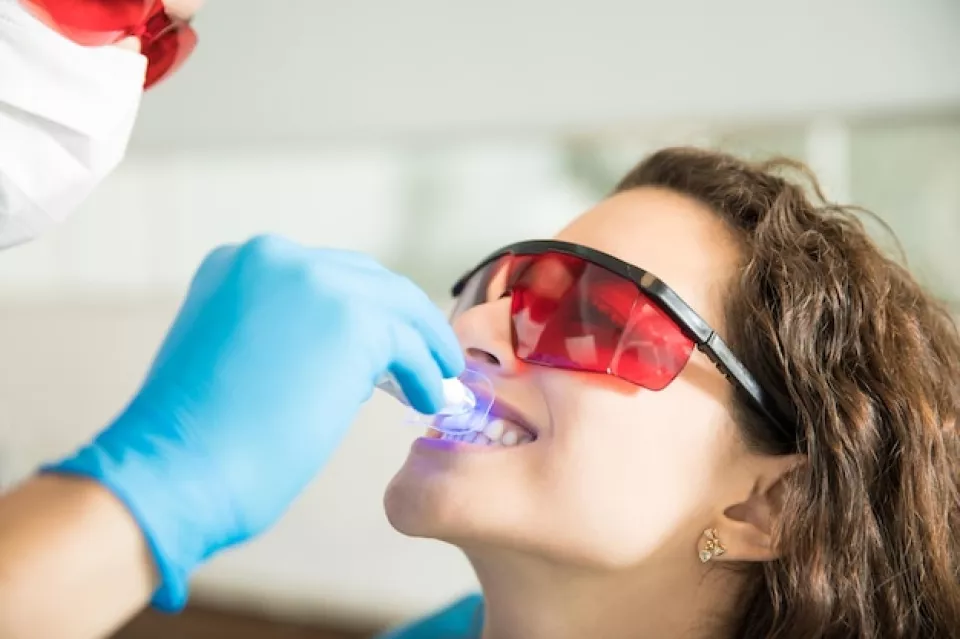
Laser dentistry is growing because it can reduce bleeding, reduce sensitivity in select procedures, and support minimally invasive dental procedures.
Laser-assisted caries detection and soft tissue procedures
Laser-assisted caries detection exists as a diagnostic adjunct in some practices, while therapeutic lasers are used more often for soft tissue management, periodontal pocket decontamination protocols, frenectomies, and gum contouring where appropriate.
The value proposition is patient comfort and faster recovery for certain indications.
Where laser dentistry fits best?
Laser dentistry fits best in cases where soft tissue control matters and where a minimally invasive approach reduces post-op discomfort. The dentist’s case selection matters more than the device brand.
Teledentistry solutions and remote monitoring
Teledentistry is now a stable part of many U.S. clinic workflows for triage, follow-up, and access expansion.
What teledentistry does well
Teledentistry does well in:
- Post-op checks and symptom follow-up
- Early assessment and triage of dental problems
- Oral hygiene coaching and risk-factor review tied to oral health plans
- Teledentistry remote patient monitoring in orthodontics through photo-based checks and app-based prompts
Clinical literature continues to evaluate effectiveness, patient satisfaction, and limitations, especially around diagnostic boundaries and the need for in-person imaging when indicated.
What teledentistry cannot replace?
Procedures still require chair time. Diagnostic certainty still depends on clinical exam and imaging when symptoms, risk, or complexity justify it. The best teledentistry workflows make the “in-office threshold” clear, so patients do not delay needed care.
Augmented Reality (AR) and Virtual Reality (VR) in dentistry
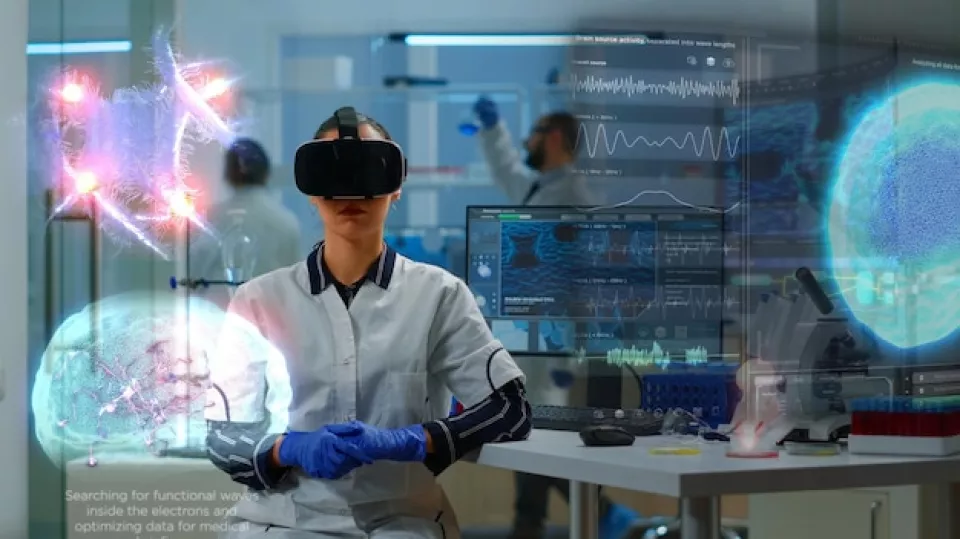
Augmented Reality (AR) and Virtual Reality (VR) are moving from novelty into targeted clinical support: anxiety reduction, patient education, and training.
Virtual reality patient education and anxiety reduction
Virtual Reality (VR) is being studied and used to reduce anxiety and improve cooperation in certain patient groups. Recent clinical research continues to test VR in dentistry settings for anxiety-related outcomes.
Augmented reality surgical guidance
Augmented Reality (AR) surgical guidance is an emerging area, most relevant for implant planning visualization and training. Adoption depends on integration cost, staff training, and measurable benefit over existing guided-surgery workflows.
Robotics in dentistry and automation
Robotics in Dentistry is early-stage for most general practices. The current reality is selective adoption in specialty settings, with gradual expansion.
Where robotics adds value
Robotic dental surgery precision can add value in:
- Highly standardized drilling or guidance steps
- Reproducible implant osteotomy planning support
- Training and safety check workflows
A practical way to frame robotics in 2025-26: support for consistency and safety, not replacement of clinical judgment.
Dental software solutions, records, and security
Digital tools extend beyond imaging. The fastest-moving operational trends are cloud workflows and automation that reduce admin time.
Cloud-based dental record security and EHR integration
Electronic Health Records (EHR) in dentistry tie into scheduling, imaging storage, claims, and clinical notes. Cloud-based dental record security is now a core risk area because breaches damage trust and create compliance exposure. In the U.S., HIPAA-driven processes and vendor security posture matter.
Voice-activated dental charting and patient messaging
Voice-activated dental charting and AI-assisted note drafting are being tested and adopted to reduce documentation load. The best implementations focus on:
- Clinician verification before signing notes
- Clear audit trails
- Tight access control and role-based permissions
Medicare, dental insurance, and cost transparency
Dental technology trends influence pricing and coverage discussions because they change procedure mix and time requirements.
Medicare and dental care in the U.S.
Medicare generally does not cover routine dental care, yet coverage can apply in certain medically necessary circumstances tied to medical treatment. Patients often rely on dental insurance, Medicare Advantage plans, or out-of-pocket payment for routine dentistry.

How tech supports cost-effective long-term care?
Technology supports cost-effective long-term care when it prevents late-stage dental problems. Early detection plus conservative intervention often reduces the chance of root canal therapy, surgical periodontal treatment, or tooth loss. The financial benefit depends on follow-through: home care, recall frequency, and risk-based prevention.
What patients should ask during a routine dental visit?
A routine dental visit is the right time to confirm which digital dentistry advancements are in use and how they affect diagnosis.
Use these questions to get clear answers:
- “Do you use AI-assisted X-rays or AI-assisted radiographic analysis?” Ask how the dentist validates AI flags.
- “Do you recommend 3D imaging or CBCT scans for this case?” Ask what decision the 3D images change.
- “Do you use intraoral scanners for digital impressions?” Ask how remakes and fit issues are handled.
- “Can you do same-day crowns with CAD/CAM Dentistry?” Ask about fewer appointments and whether temporaries are needed.
- “Do you use 3D printing technology for guides or restorations?” Ask what is printed in-house versus sent out.
- “Is laser dentistry available for gum treatment or minimally invasive treatments?” Ask what outcomes improve for the specific condition.
- “Do you offer teledentistry for follow-ups?” Ask which symptoms trigger an in-person exam.
FAQs: latest technology in dentistry
What is the latest dental technology in 2025-26?
The latest dental technology in 2025-26 includes AI-assisted X-rays, CBCT-based 3D imaging, intraoral scanners for digital impressions, chairside CAD/CAM Dentistry for same-day crowns, and expanding 3D printing in dentistry for guides and appliances.
What dental technology trends improve diagnosis the most?
AI-assisted radiographic analysis and 3D imaging with CBCT scans improve diagnosis the most because they increase clinical accuracy, support early cavity and gum disease detection, and reduce missed structural issues.
Are AI tools safe in a routine dental visit?
AI tools are safe when the dentist uses AI software as decision support and validates findings clinically rather than relying on automation alone. Regulatory clearance and clinical research support that “assistive” model as adoption grows. (SAGE Journals)
Do same-day crowns last as long as traditional crowns?
Same-day crowns can last as long as traditional crowns when design, material choice, bite control, and cementation are done well. The main difference is the workflow: digital impressions plus on-site fabrication compresses time.
What is teledentistry best used for?
Teledentistry is best used for triage, follow-ups, education, and remote monitoring when an in-person procedure is not required.
Conclusion
Dental technology trends in the United States (U.S.) in 2025-26 are shaping dentistry around advanced dental technology that improves clinical accuracy, patient comfort, and long-term oral health. The core stack is stable: AI-assisted X-rays, 3D imaging with CBCT scans, intraoral scanners for digital impressions, CAD/CAM Dentistry for same-day crowns, and 3D printing technology for modern restorations. Layered on top are teledentistry solutions, laser dentistry technology for minimally invasive treatments, and early-stage AR/VR and robotics efforts aimed at predictable outcomes and better patient experience.
If you want, I can convert this into a clinic-ready version with a tighter word count, a local SEO angle for a U.S. city, or a patient-facing checklist formatted for a blog or landing page.




Leave a Reply